
The human layer, part 2: The learning ratio
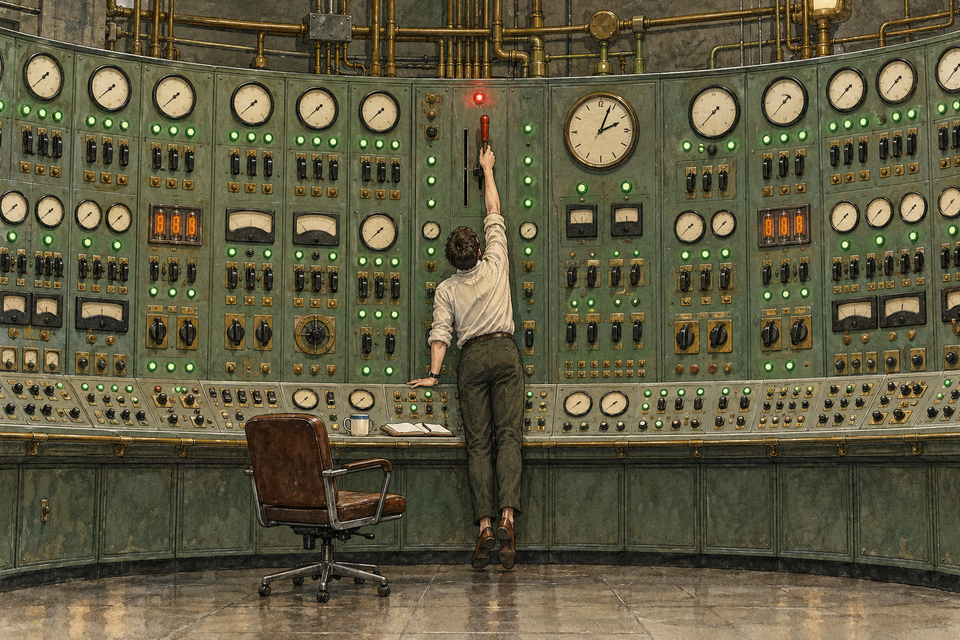
I now spend an hour reading for every two hours building. It feels indulgent, but data says it could be even more.
Introduction
Part 1: Brain fry
Part 2: The learning ratio (this post)
Part 3: The four modes of AI coding (and why you can only be in one)
Part 4: Delegate accountability, not tasks
I spend about a third of my working week reading and learning, and it has taken me months to stop feeling guilty about it.
For most of my career, three or four hours of reading in a whole week was a good week. My industry peers have always been surprised at how much time I would find (as a founder, no less) to also be across industry developments, new tech and world events.
The rest was work: building, shipping, fixing and managing people. Reading was what you did on the train or when a project was between phases. If I had told my younger self I would one day spend a third of the week on it, he would have assumed I had retired.
Now the ratio is roughly one hour of learning to two of building, and on some weeks it is closer to half and half.
There are two main reasons for this.
You can't opt out of learning
The first is that the pace of change is like nothing I've seen my whole life. New models, new tools, new ways of working arrive weekly, and a method that was best practice in the spring is often a bad habit by the autumn. If you are not putting something like ten hours a week into keeping up, you are falling behind, and the gap widens.
IBM put a number on this before generative AI arrived: the half-life of a professional skill is about five years, and of a technical skill about two and a half. Those figures are from 2020. They will not have got longer.
The arithmetic has changed
The second reason is the one that actually helped address the guilt I was feeling, and it's simple maths.
Learning is limited by my brain. AI can gather the material, summarise it, answer questions about it, and I learn faster than I did. Call it two times. But at the end of the day I can only absorb ideas as fast as I can think, and that has not changed.
Building is different. On the building side I am five to ten times more productive than I was. The same hour at the keyboard produces several times the output it used to.
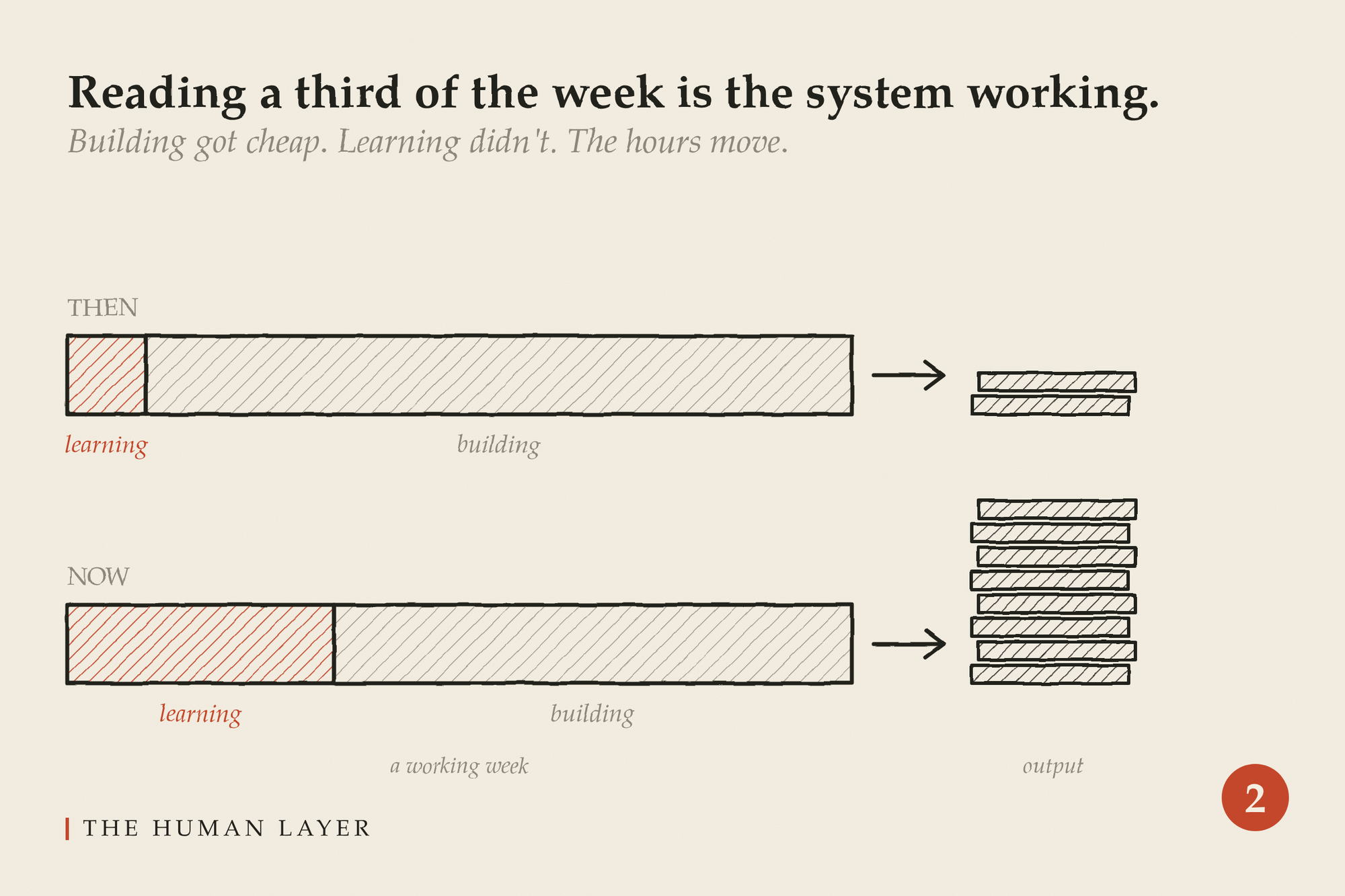
Put those two facts together and the right split of the week changes. Building got cheap, so the same output needs far fewer hours, and those hours are freed up. Learning did not get cheap, so it still needs the hours it always did, and now it has them. Better still, every hour of learning now pays back against a five-to-ten-times activity, because what I learn makes the building hours sharper. Both effects push the same way. A third of the week on reading is the system working as it should.
The output paradox
The result is that spending 30%-50% of my time reading and learning in 2026, is probably the same ratio of learning-to-output as it was 20 years earlier in 2006, when I only spent perhaps 5% of my time learning.
The guilt comes from measuring the wrong thing. I was raised to think about a working week in hours spent working, and by that measure I am working less. Measured by output, I am producing more in my two hours building than I used to produce in a full day of old-style work, and reading a third of the time has not dented that.
So the truth is this: fewer hours of building, far more output, and a much larger slice of the week spent learning. It feels wrong because the instinct about effort and output was built in a world where the two moved together, which no longer holds.
I now allow myself to read and learn whenever and wherever my curiosity leads me, and I measure my week by what shipped rather than by how many hours I sat at the keyboard. I'm still getting used to this, but making the conscious switch has made a massive difference to how I feel about my work.